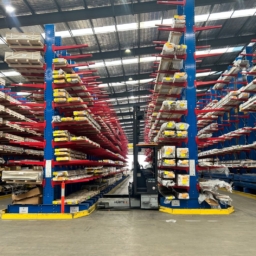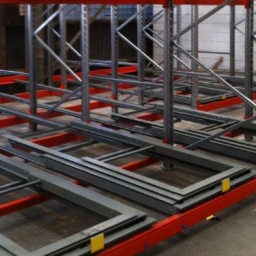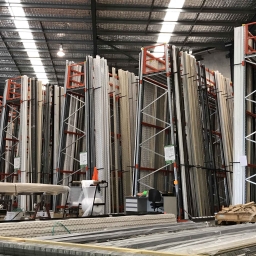

For a warehouse manager or business owner, AS4084:2023 does not necessarily mean everything in the warehouse suddenly changes overnight.
The practical change is more about a general upgrade in quality, stronger designs, more protection and a better level of confidence that the racking is going to sustain and stand up.
New racking is built to the latest standard. Older racking can still be used if it remains in the same warehouse and is used for the exact same purpose.
It is a bit like a classic car. It is older, but that does not automatically mean it cannot be used.
New Racking May Allow Better Capacity
Capacity wise, newer racking has generally improved.
With the latest standard, the racking is designed with more strength and rigidity. That means businesses may be able to go higher if they decide to install new racking, depending on the warehouse, forklift and overall design.
It is not just about adding more steel for the sake of it.
The newer requirements are there to make sure the rack is built with stronger design principles from the start.
More Bracing, Extra Bolts And More Protection
The changes a warehouse manager may physically notice include things like extra bracing, extra bolts, heavier foot plates and more protection.
Racking protection in the warehouse has been brought in to be recommended more strongly than it was previously.
That makes sense because most racking damage does not happen because the rack suddenly gives up by itself. It happens because something hits it or loads it incorrectly.
Better protection gives the rack a better chance of surviving normal warehouse life.
The Day-To-Day Operation Should Still Be Simple
Once the racking is installed, it should be fairly self-maintained.
Obviously, if someone crashes into it or damages it, that changes things. But properly installed, good quality racking should stay upright by itself. That is the purpose of having professional installers and good quality racking.
The real day-to-day change is keeping an eye on it.
Do the monthly visual check. Get the yearly competent inspection. Keep the signage up to date. Do not change beam levels or storage methods without understanding what that does to engineering and capacity.
The standard is not there to make warehouse life harder. It is there so the rack keeps doing what it is meant to do.
About Leo Kanas
Leo Kanas brings over two decades of hands-on experience in warehouse storage systems and racking design. As Project Manager and lead designer at Macrack Australia, Leo works at the intersection of engineering, layout optimisation, and customer-driven solutions. He holds qualifications in project management and industrial design, and has overseen dozens of warehouse redesigns across Australia. Leo is passionate about helping businesses unlock hidden capacity, streamline workflows, and future-proof their storage systems.
Get A Free Design And Quote
Ensure Your Warehouse Storage Solution Has A Lifetime Guarantee Contact Us Today
Add Macrack as a Preferred Source in Google
We regularly share practical advice and expert insights from the Macrack team on warehouse racking, storage, safety and warehouse efficiency relevant to the Australian market. Add Macrack as one of your preferred sources in Google to see more of our insights when you search.