We recently sat down with Leo Kanas from Macrack, who’s spent more than 20 years helping businesses design smarter, safer, and more efficient warehouses. In this article, Leo shares the practical changes he looks for when walking into a warehouse; the simple layout adjustments and racking upgrades that can free up space, improve workflow, and future-proof your operations.
Tell-tale Signs a Warehouse Can Improve Efficiency

When you first walk into a warehouse, there are a few instant giveaways that it’s not running efficiently. For me, the biggest tell-tale sign is pallets scattered around the warehouse floor. That usually means the business has expanded rapidly without the prior planning required for the warehouse to keep up. If I’m stepping around things just to get through the warehouse, I already know they’ve outgrown their layout.
The first thing I do is look up. There’s often unused space between the top of the racking and the roof. You’re paying rent on the air as well as the floor, so if you’re not using your full warehouse height, you’re wasting storage capacity you’ve already paid for. By making better use of that space, you can store more, improve safety, and run more efficiently without having to move.
The Cost of Wasted Space

The most common cause of wasted space and lost time comes down to inefficient storage and layout planning. When stock is stored on the floor or isn’t properly labelled, forklift drivers spend too long hunting for the right pallet. That means wasted labour, wasted time, and ultimately wasted money.
A well-designed racking layout changes that completely. Racking might seem like an expense at first, but it’s really an investment. You’re not renting it, you own it. It can save you from having to move to a larger warehouse (avoiding increases in warehouse lease costs), and when you do eventually relocate, you can take it with you. It’s one of the few parts of your warehouse you can literally move and reuse forever.
The Power of Vertical Storage

The simplest way to make an immediate difference in warehouse efficiency is to go up. Most forklifts in day-to-day operations can reach around 4.8 metres, so we often design racking around that height. But with a small change to your forklift rental, sometimes just a few extra dollars per week, you can move to a six-metre reach and instantly open the option to double your storage capacity.
If your current pallet racking is only two or three levels high, extending it to four, five or even six levels can completely transform your space. We future-proof installations by designing uprights that can be extended later using splice kits, so as your business grows, your storage can grow with you without starting from scratch.
Balancing Density and Accessibility
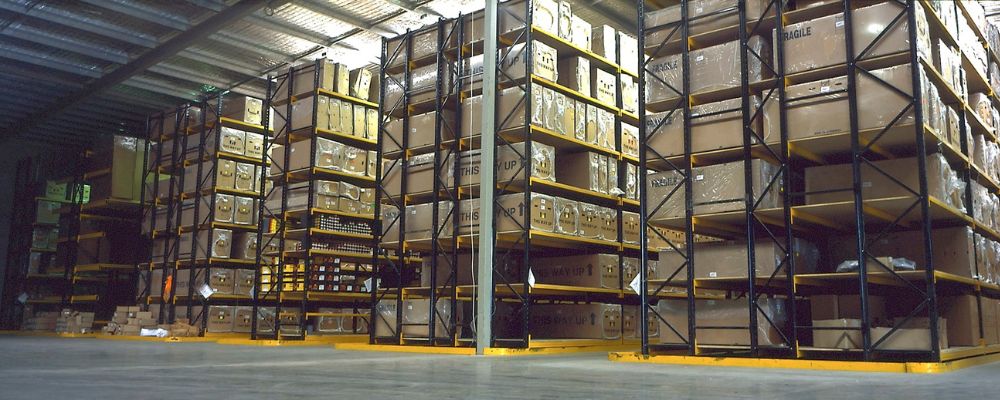
Every warehouse layout is a balancing act between selectivity (how easily you can access each pallet) and density (how much you can store). The right solution depends on your number of SKUs, volume of each SKU, product type and your material-handling equipment.
For example, a standard gas ride-on forklift typically needs about a four-metre aisle, whereas an electric stock picker can work comfortably in three metres. Narrowing aisles gives you more storage in the same footprint, but only if your equipment and product type suit it. We also consider product height and weight; taller items might go on the top levels, while smaller products are compacted lower down to get maximum use out of every cubic metre.
When to Consider Narrow Aisle and Raised Storage
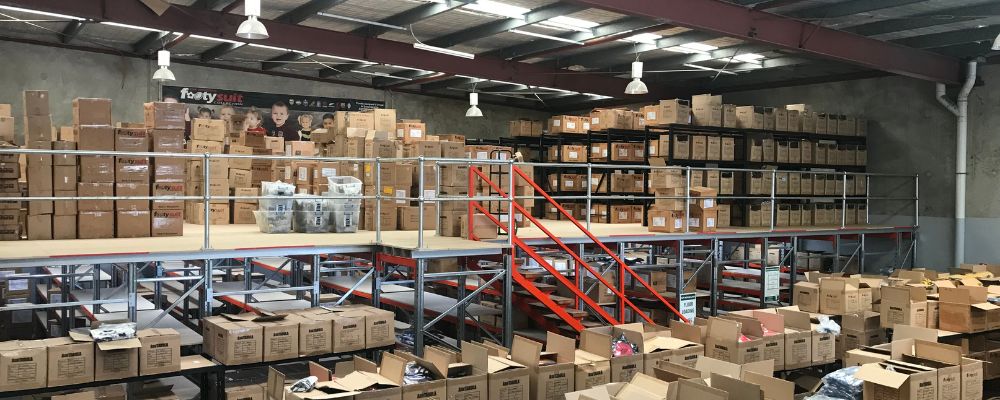
With rising warehouse rental costs, we’re seeing more businesses upgrade their layout before considering a move. Switching from wide-aisle selective racking to a narrow-aisle configuration can nearly double capacity.
For example, one client, Reliance Worldwide Corporation, worked with us and their forklift supplier to switch from 4.5 metre aisles to 2.7 metres. Without changing buildings, they doubled their storage space and added carton live storage for faster, first-in-first-out picking.
Another great option for growing businesses is a raised storage area. Built using the same components as pallet racking, it effectively doubles your floor space. We’ve had clients with longspan shelving who needed more room for small parts, by adding a raised storage level above, they doubled their picking area without paying higher rent or moving warehouses. It’s a much more affordable and flexible option than a fixed structural mezzanine, and it can be dismantled and reused if you relocate.
Tailored Solutions for Every Product Type
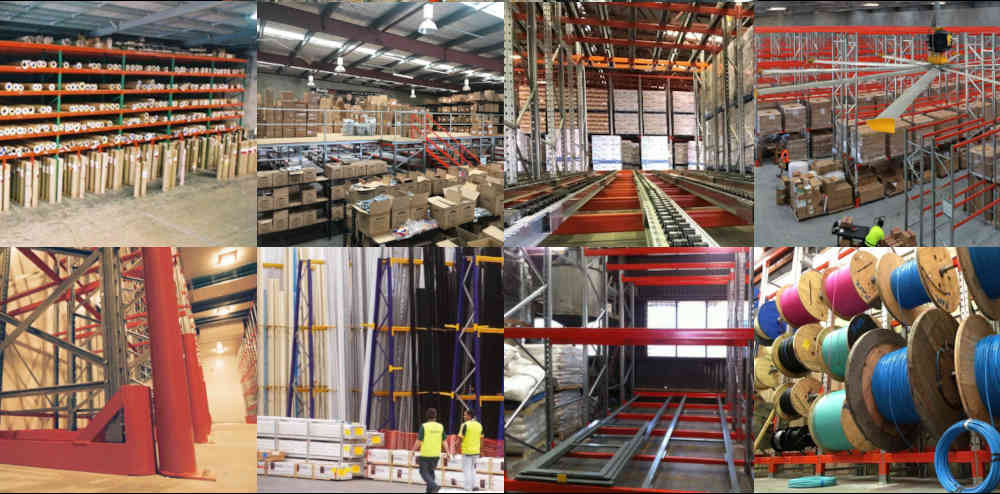
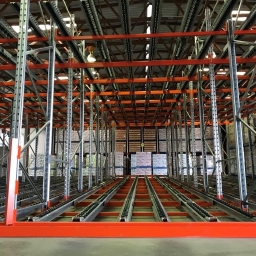
Every industry is different, and so are the best storage solutions. From selective, double deep, and drive-in pallet racking to cantilever, sheet, and A-frame racking systems, each type has its place depending on the product and how it’s handled. For pallet racking it often comes down to balancing selectivity versus storage density whether quick access to every pallet or maximum capacity is the bigger priority.
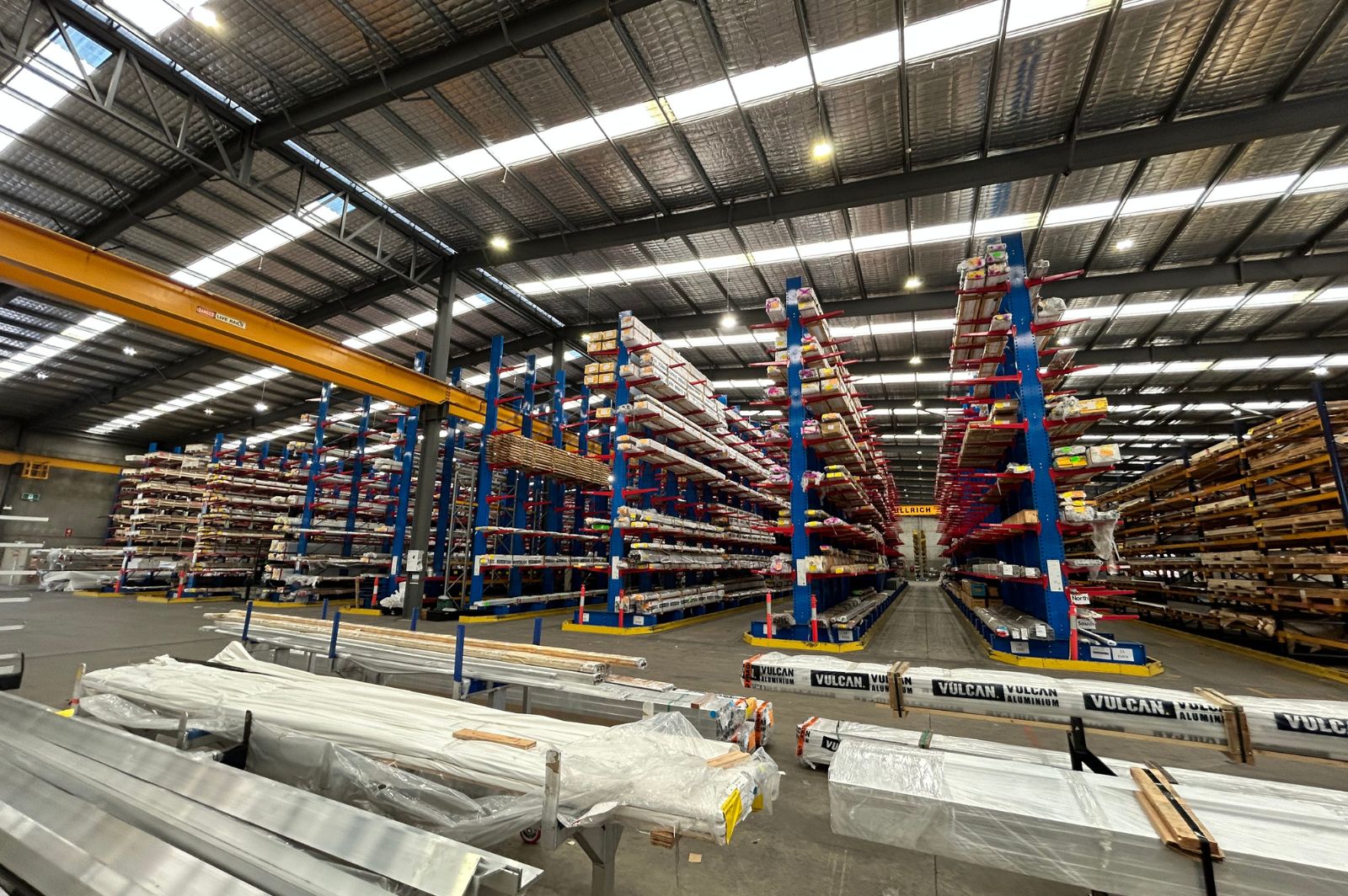
If you’re storing long products like timber, conduit, or steel, cantilever or A-frame racking is usually the answer. For sheet materials like plywood or metal, we’d look at sheet racking, while small parts might call for longspan shelving or bin systems.
A lot of warehouse managers just know they’ve “run out of space,” but don’t know what options exist to fix it. That’s where experience matters. After 20 years in the industry, I can usually walk in and know what’s going to work best. At Macrack, we sit down with clients, learn how their business operates, and design a system that fits not just today’s needs but their future growth as well.
Long-Term Efficiency Through Planning
The most efficient warehouses are the ones designed with growth in mind. It’s not just about stacking things higher or squeezing more racks in, it’s about future-proofing your operation.
That’s why we take the time to understand the client’s business inside and out, how they pick, pack, and move goods, so we can deliver a layout that works as a cohesive system. Sometimes it’s a simple racking upgrade; sometimes it’s a complete redesign. But every project has the same goal: helping businesses get more from the space they already have.
Book A Free Warehouse Design Consultation
If your warehouse is starting to feel cramped or inefficient, Macrack can help you make the most of the space you already have. Contact Leo and the team at macrack on 1800 048 821 or fill out our online form to book a free warehouse design consultation.
About Leo Kanas
Leo Kanas brings over two decades of hands-on experience in warehouse storage systems and racking design. As Project Manager and lead designer at Macrack Australia, Leo works at the intersection of engineering, layout optimisation, and customer-driven solutions. He holds qualifications in project management and industrial design, and has overseen dozens of warehouse redesigns across Australia. Leo is passionate about helping businesses unlock hidden capacity, streamline workflows, and future-proof their storage systems.
Get A Free Design And Quote
Ensure Your Warehouse Storage Solution Has A Lifetime Guarantee Contact Us Today